18+ Hotels in Greece: A Guide to Adults-Only Stays
Greece is often imagined through blue domes, bright harbors, and dinners that stretch past sunset, yet many travelers choose it for something quieter: the chance to rest well. That makes 18+ hotels especially relevant. By welcoming adults only, these properties offer calmer surroundings for couples, solo guests, and friends who value privacy, thoughtful design, and a slower rhythm than a typical family resort can provide.
Outline: This guide begins by explaining what an 18+ hotel in Greece usually means in practice. It then compares major destinations, from famous islands to lesser-discussed mainland escapes. The next section looks at hotel styles, amenities, and what travelers actually get for the price. After that, a practical planning section covers budgets, timing, and booking decisions. It ends with a conclusion focused on matching the right adults-only stay to different traveler profiles.
1. Understanding What 18+ Hotels in Greece Actually Offer
At first glance, the idea of an 18+ hotel can sound simple: no children, quieter pool, calmer breakfast room. In reality, the category is broader than that. In Greece, adults-only properties range from intimate boutique stays with six or ten suites to large beachfront resorts with several restaurants, spa areas, and organized evening entertainment. Some focus on romance, some on wellness, some on design, and some on easygoing social energy. The common thread is not luxury alone, and it is not necessarily nightlife either. It is the deliberate shaping of an environment around adult preferences, schedules, and expectations.
That distinction matters because many travelers book an adults-only stay expecting one thing and finding another. A cave suite in Santorini may offer total privacy, sunset views, and breakfast on a terrace, but little in the way of on-site facilities. A larger resort in Crete may provide a private beach section, multiple bars, and a full spa, yet feel more active and less secluded. Reading the label is not enough. Travelers need to look at the hotel’s scale, location, dining options, room design, and overall tone. Some properties are “couples-oriented” in atmosphere, while others are equally suitable for solo travelers or friends taking a grown-up break.
In Greece, age policies can also vary. One property may allow guests aged 16 and above, while another is strictly 18+ or even 21+ in specific packages or areas. This is why the hotel’s own rules should always be checked before booking. Common features often include: • quieter pools and public spaces • restaurants with later dining hours • spa and wellness facilities • premium room categories such as suites, swim-up rooms, or plunge pools • a stronger emphasis on design, views, and personalized service
There is also a practical reason these hotels have become more visible. Greece attracts many kinds of visitors, from multigenerational family groups to honeymooners, remote workers, and short-break couples arriving from across Europe and beyond. As travel preferences have become more segmented, hoteliers have responded with more clearly defined concepts. An adults-only hotel answers a real demand: not for exclusivity in a showy sense, but for a smoother atmosphere. If your ideal morning includes coffee in silence, if your afternoon means reading by the sea without children’s activity programs nearby, or if your evening starts with a long dinner rather than a buffet rush, then the category is not a gimmick. It is a travel format built around a specific kind of comfort.
2. Choosing the Right Destination: Greek Islands and Mainland Areas Compared
One of the biggest mistakes travelers make is choosing a hotel style before choosing the right destination. In Greece, place shapes the holiday as much as the room does. An adults-only stay in Santorini feels very different from one in Crete, Rhodes, Corfu, or the Athens Riviera. The sea may be the common backdrop, but the rhythm, scenery, and practical logistics vary significantly. This is why location deserves just as much attention as amenities.
Santorini remains the classic choice for dramatic views and romantic atmosphere. Many adults-only properties here are small or mid-sized boutique hotels built into cliffs, often with terraces, jacuzzis, or plunge pools facing the caldera. The visual impact is extraordinary, and the setting suits shorter stays, anniversaries, or travelers who prioritize scenery over beach time. The trade-off is price and terrain. Rooms with famous views typically cost more, and many hotels involve stairs, narrow lanes, or porter-assisted luggage handling. If your dream is waking up above the Aegean with whitewashed villages glowing in the evening light, Santorini is hard to beat, but it is rarely the most budget-friendly option.
Mykonos offers a different adult-oriented appeal. It is known for beach clubs, stylish design hotels, and a more social atmosphere. Some travelers love its energy, while others find it too expensive or too busy in peak summer. Adults-only hotels here can range from peaceful hillside retreats to properties that lean into music, cocktails, and a fashionable crowd. Crete, by contrast, is more varied and often more practical for longer stays. It has a broad mix of adults-only resorts, beach properties, and spa hotels, along with strong food culture and room to explore villages, beaches, and archaeological sites. Rhodes provides a similar balance of resort infrastructure and sightseeing, while Corfu often attracts travelers looking for greenery, elegant coastal settings, and easier island wandering.
The mainland deserves more attention than it often gets. The Athens Riviera works well for travelers combining city breaks with seaside relaxation. Peloponnese resorts can offer more space, easier driving routes, and a calmer luxury feel without the intense summer concentration seen on the most famous islands. As a practical comparison: • choose Santorini for views and short romantic stays • choose Mykonos for style and social energy • choose Crete for variety and longer holidays • choose Rhodes for beaches plus history • choose Corfu for lush scenery and a softer pace • choose the mainland for easier logistics and often better value
Season also changes the equation. The Cyclades can feel windier and more crowded in high summer, while larger islands such as Crete can absorb visitors more comfortably because they offer more space and a longer travel season. Shoulder months like May, June, September, and early October often bring the best balance of warmth, manageable prices, and a more relaxed mood. In other words, the right destination is not simply the prettiest one online. It is the place whose atmosphere matches the kind of adults-only holiday you actually want.
3. Hotel Styles, Amenities, and the Real Difference Between Good and Great Stays
Once the destination is settled, the next question is what kind of adults-only hotel experience you want. In Greece, the category includes several distinct formats, and they do not serve the same type of traveler. A small design-led boutique hotel may deliver intimacy, memorable architecture, and personalized service, but limited communal facilities. A larger resort may offer more restaurants, gym access, entertainment, and direct beach access, yet feel less private. Neither approach is automatically better. The best option depends on how you spend your time when you travel.
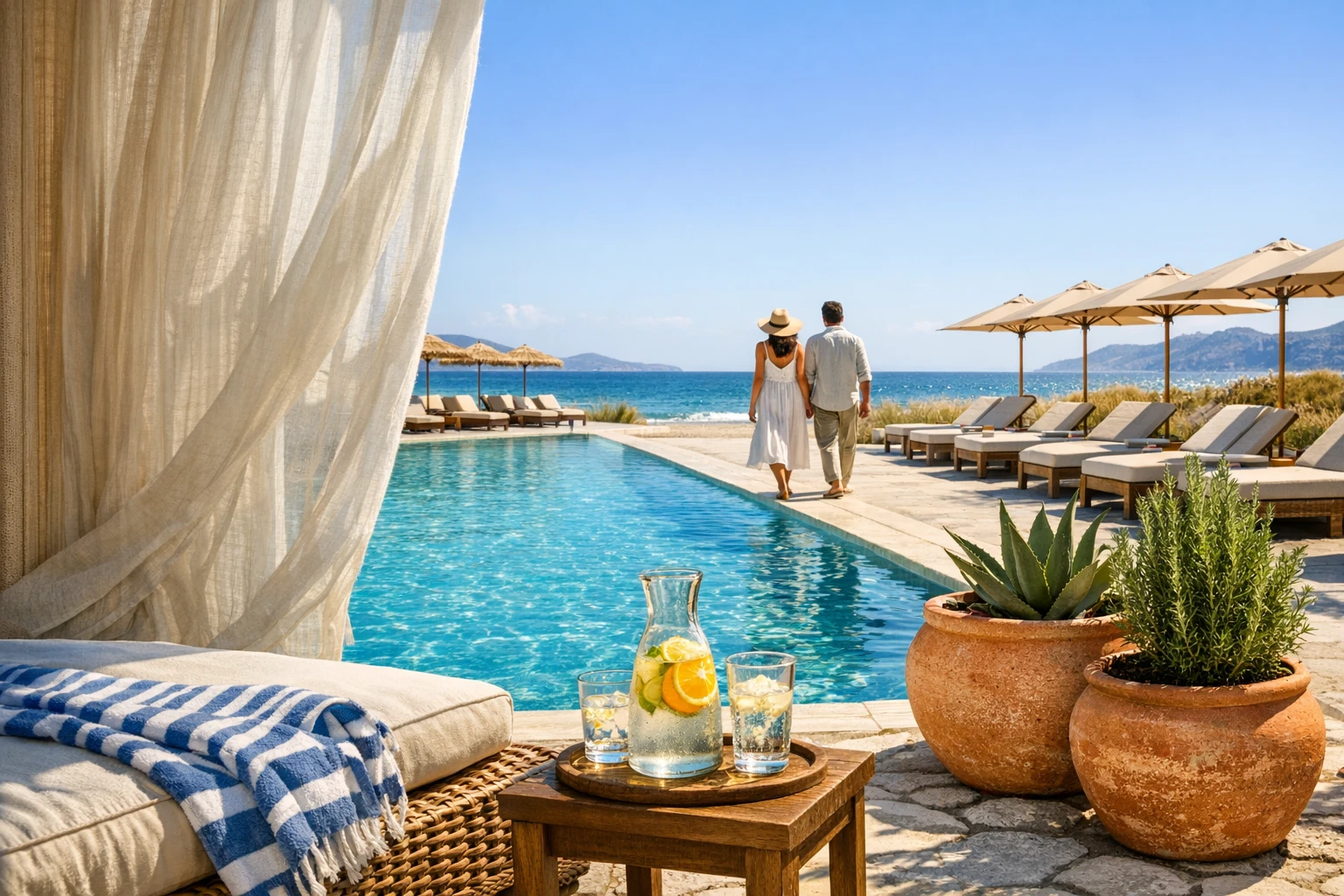
One common format is the romantic boutique retreat. These hotels are especially common in Santorini and selected parts of Crete and the Dodecanese. They often focus on suites, high-end bathrooms, sea-view terraces, and breakfast served in-room or on a private balcony. If your priority is atmosphere, this style can feel wonderfully cinematic. Another format is the beachfront adults-only resort, more common on larger islands. These properties tend to offer pool complexes, cabanas, wellness areas, organized dining, and sometimes all-inclusive or half-board plans. They suit travelers who want convenience and do not want to leave the property for every meal or activity.
A third option is the wellness-oriented hotel. These places lean into spa treatments, yoga sessions, thermal areas, and healthier dining, making them attractive for guests who want restoration rather than nightlife. There are also stylish urban or semi-urban properties, particularly near Athens or in more developed resort zones, where the emphasis is on short breaks, polished interiors, and proximity to bars, marinas, or cultural attractions. To compare effectively, travelers should look beyond the headline photos and ask what the rate truly includes. Consider: • room size and whether the outdoor area is genuinely private • distance to the beach or nearest town • quality and flexibility of breakfast • whether the pool area is serene or more social • if there are enough dining options nearby when the hotel restaurant is limited • whether transfers, parking, or ferry access are straightforward
Some amenities sound impressive but matter less in practice than they do in advertising. A plunge pool, for example, can be a lovely feature in shoulder season and a very small visual extra in a high-priced room category. By contrast, details such as a shaded terrace, comfortable mattress, reliable air conditioning, or a genuinely good breakfast can improve every single day of the stay. Great adults-only hotels usually understand this. They do not just remove children from the setting; they redesign the experience around calm routines, sensory comfort, and thoughtful pacing. The difference is subtle but important. A good hotel offers a room. A great one shapes how the whole trip feels from morning to night.
4. Budget, Booking Timing, and Smart Planning for an Adults-Only Stay
Adults-only hotels in Greece can sit at very different price points, so smart planning matters more than many travelers expect. The phrase itself often suggests luxury, and many properties do lean upscale, but not every 18+ stay is ultra-expensive. Value depends on destination, season, room category, and how much time you plan to spend using the hotel’s facilities. A compact boutique stay with breakfast may be the right choice for travelers who want to explore, while a more expensive resort can make sense if you intend to spend long hours on-site.
Seasonality is the biggest cost factor. July and August usually bring the highest rates, strongest demand, and the fastest sell-outs for sea-view rooms, private pools, and premium suites. Shoulder season can be far more attractive. In May, June, September, and often early October, many parts of Greece still offer warm weather, swimmable seas, and a more breathable pace. Prices vary widely, but as a broad planning guide, travelers may find boutique adults-only rooms in quieter areas starting from moderate mid-range levels in shoulder season, while iconic islands and top-tier resorts can rise dramatically in peak months. Luxury categories with caldera views, private terraces, or beachfront suite access often command premium rates year-round.
Booking strategy should also account for transport. A room that looks affordable can become less appealing if it requires expensive transfers, multiple ferry connections, or a rental car that was not in the budget. In contrast, an Athens Riviera hotel may cost more per night but save time and logistics for a short break. The same logic applies to meal plans. A breakfast-only rate can work beautifully near a village filled with tavernas, while half-board may be useful at a more isolated resort. Before confirming, ask practical questions: • How far is the property from the airport or ferry port? • Is the advertised sea view partial, panoramic, or distant? • Are there enough nearby restaurants if you do not book dinner? • Does the room category include outdoor privacy or just a shared terrace zone? • Is the cancellation policy flexible? • Are there steps or access issues that could affect comfort?
Reviews are useful, but they should be read carefully. Instead of focusing only on star ratings, look for patterns: repeated praise for service, repeated complaints about noise, or recurring comments about food quality, transfer difficulty, or worn interiors. Photos uploaded by guests can also be revealing. The most successful bookings usually happen when travelers balance emotion and detail. It is fine to choose a hotel because the view made you pause for a second. Just make sure the fine print, transport plan, room category, and realistic daily costs also line up. That combination turns a beautiful idea into a holiday that feels easy from the moment you arrive.
5. Conclusion: Finding the Right Adults-Only Hotel in Greece for Your Travel Style
For the right traveler, an adults-only hotel in Greece can be more than a place to sleep. It can shape the entire mood of the trip. That matters because Greece offers such a wide range of settings: volcanic islands with unforgettable sunsets, long sandy coasts with full-service resorts, elegant green islands, and mainland retreats where the pace is slower and the crowds thinner. The best choice is not the most famous hotel or the room with the most dramatic photo. It is the one that fits the way you actually like to travel.
Couples who want privacy and atmosphere may gravitate toward boutique properties with sea views, terraces, and intimate dining. Friends traveling together may prefer a stylish resort with multiple bars, beach access, and enough shared spaces to keep the days flexible. Solo travelers often benefit from smaller hotels where service feels attentive and the surroundings are peaceful rather than isolating. Guests planning a longer stay may find better value on larger islands such as Crete or Rhodes, where it is easier to combine relaxation with excursions, local food, and cultural stops. Travelers on a short break may do better near Athens or on an island with direct flight connections, where precious time is not lost to complex transfers.
It also helps to remember what adults-only does and does not guarantee. It usually means less noise, fewer interruptions, and a more mature atmosphere. It does not automatically mean total seclusion, romance, or luxury. That is why the smartest approach is to match the hotel concept to your own priorities. Ask yourself what matters most: beach access, walkable location, spa quality, room privacy, food, views, or budget stability. Once those priorities are clear, the list of suitable options becomes much easier to manage.
If you are the kind of traveler who appreciates an unhurried breakfast, a pool area where conversation stays low, and evenings built around good food rather than crowded schedules, Greece has many compelling 18+ options. The country’s variety is its advantage. You can choose cliffside drama, barefoot beach simplicity, or polished resort comfort without leaving the broader promise that draws so many people there in the first place: light, sea, hospitality, and the sense that time has finally slowed down enough to enjoy them properly.