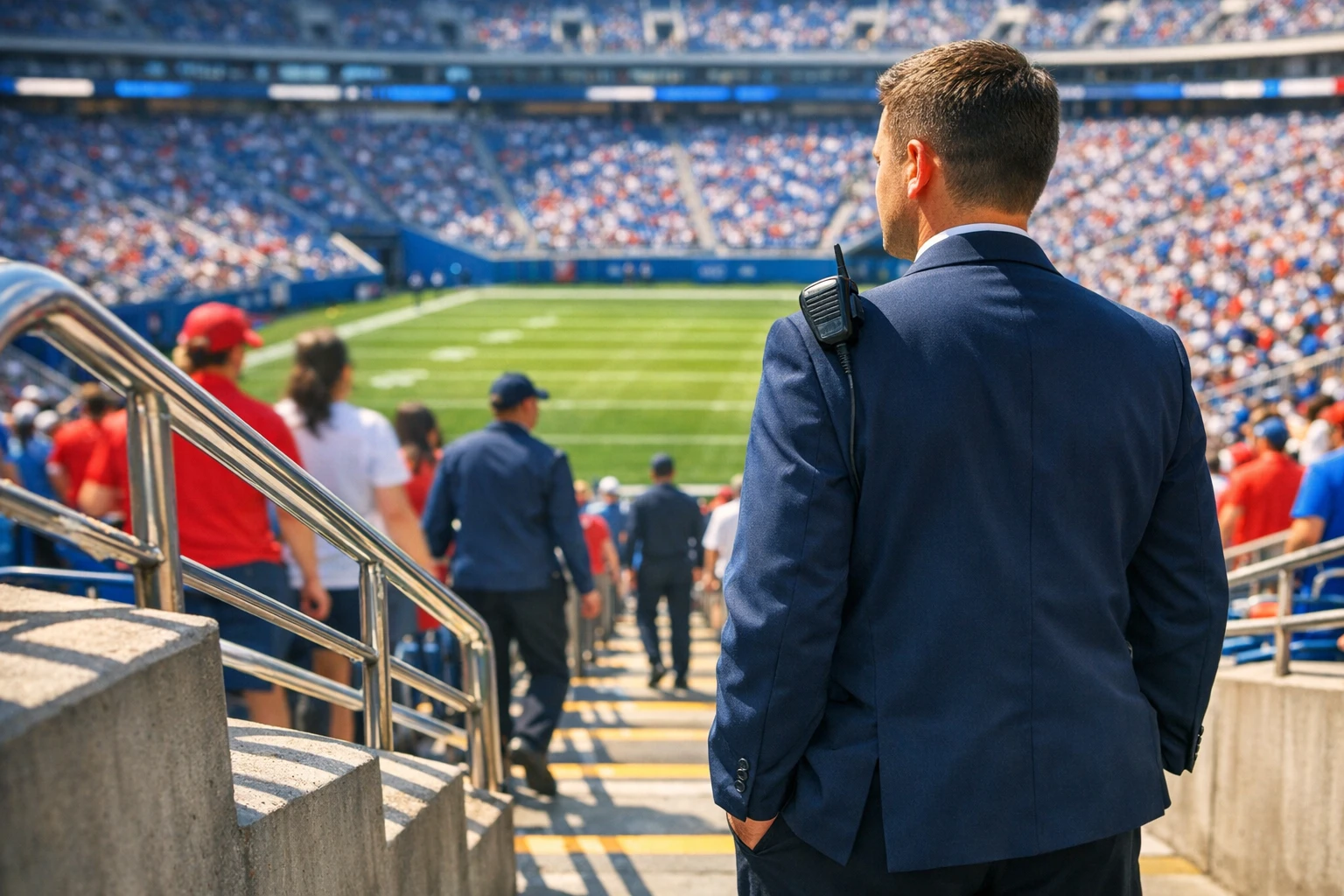
Part-Time Stadium Event Staff: Roles, Duties, and How to Get Started
On game day, most fans notice the scoreboard, the anthem, and the noise, yet the event only works because a large team keeps entrances moving, seats organized, and guests safe. Part-time stadium event staff fill that gap, making live sports and concerts possible while gaining flexible income and practical experience. For students, career changers, and anyone seeking weekend work, these jobs offer a realistic entry point into hospitality, security, operations, and customer service.
Outline
- What part-time stadium event staff do and why venues rely on them
- The most common roles, duties, and work areas inside and outside the venue
- Scheduling, pay, physical demands, and the skills that matter most
- How to apply, prepare for hiring, and perform well on your first shifts
- Who this work suits best and how it can lead to larger opportunities
1. Why Stadiums Depend on Part-Time Event Staff
Stadiums are unusual workplaces because they spend much of the week relatively quiet, then suddenly transform into high-pressure environments that host tens of thousands of people at once. A venue may seat 20,000, 50,000, or even more than 80,000 guests depending on the sport and the design of the facility. That uneven rhythm is one reason part-time staffing is so common. Employers do not need a full event-sized workforce every day, but they absolutely need one when gates open and crowds arrive in waves.
Part-time event staff make this model possible. They are commonly hired by stadium operators, sports franchises, food service contractors, security companies, parking vendors, or third-party event staffing agencies. In practical terms, that means two people working in the same building on the same night may have different employers and different pay structures. One may scan tickets for the venue, another may serve food through a concessions partner, while a third may assist with guest services under a contract team.
Compared with standard retail or restaurant work, stadium jobs have a sharper peak-and-pause rhythm. Instead of a steady stream of customers over a long shift, there are intense bursts of activity before the event, during halftime or intermission, and immediately after the crowd is released. That pattern rewards people who can stay calm while the volume rises quickly. It also explains why employers value punctuality so highly: if an usher or cashier arrives late, the missing coverage is felt right away.
These positions matter for more than convenience. Good staffing affects safety, crowd flow, revenue, and the overall reputation of the venue. A poorly managed entrance can create long lines and frustration. Slow concessions reduce sales. Weak guest support can turn a minor seating issue into a major complaint. On the other hand, strong event staffing makes a big place feel surprisingly organized. It is a bit like stage crew work in a theater: when done well, most people barely notice it, yet the whole production depends on it.
For workers, the appeal is straightforward:
- Flexible scheduling around school, another job, or family obligations
- A chance to earn income without committing to a fixed weekday routine
- Exposure to live sports, concerts, and major public events
- Experience in customer-facing operations that transfers well to other industries
That combination of flexibility and real responsibility is what makes stadium event work relevant. It is not simply “extra help” on busy nights. It is an essential labor system behind modern live entertainment.
2. Common Roles and What the Work Actually Looks Like
The phrase “stadium event staff” sounds broad because it is broad. A single venue can employ dozens of job types on event day, and each role supports a different piece of the fan experience. Some positions are highly visible, such as ushers and ticket scanners. Others happen in the background, like stock runners, set-up crews, and housekeeping teams that reset public areas. If you are considering this line of work, it helps to understand where each role sits and what a normal shift feels like.
Front-of-house positions are the most common entry point. Ushers guide guests to their sections, answer questions, enforce seating rules, and help reduce bottlenecks in aisles and entryways. Ticket takers or scanners work at gates, where speed and accuracy matter because thousands of people may arrive in a narrow time window. Guest services staff handle lost-and-found issues, accessibility requests, complaints, and seating problems. Concessions workers take orders, operate registers, prepare basic food items, restock counters, and keep lines moving during peak periods. Merchandise staff assist fans who want jerseys, caps, or souvenirs, often in fast retail environments with strong event-day sales.
Back-of-house and support roles can be just as important. Parking attendants direct vehicles into lots and help fans exit efficiently after the event. Set-up crews place stanchions, signage, tables, barriers, or temporary equipment before doors open. Conversion staff may help reconfigure the venue for a game one day and a concert the next. Cleaning and maintenance teams respond to spills, overflowing trash, restroom conditions, and urgent facility issues. Security support staff, depending on the employer and local rules, may check bags, monitor access points, or assist with crowd control while certified law enforcement or licensed security personnel handle higher-risk incidents.
Here is a simple way to compare these roles:
Guest-facing jobs: strong communication, patience, visible professionalism
Sales-oriented jobs: speed, cash handling, product knowledge, upselling awareness
Operational jobs: stamina, logistics, teamwork, comfort with physical tasks
Safety-related jobs: alertness, rule enforcement, calm response under pressure
A typical shift often begins 1 to 3 hours before the event starts. Staff may attend a brief meeting, pick up credentials, review expected attendance, and receive updates about weather, VIP access, or special crowd procedures. During the event, the pace rises and falls in waves. Halftime, intermission, and the final whistle can feel like the whole building takes a breath and then runs. There is something almost cinematic about that moment: doors swing, lines form, radios crackle, and suddenly every station matters.
Different jobs suit different personalities. If you enjoy helping people directly, ushering or guest services may fit. If you like movement and quick transactions, concessions or merchandise can be a better match. If you prefer structure and logistics, parking or operations may feel more natural. Understanding that distinction makes the job search far easier, because “stadium staff” is really a family of roles rather than one single position.
3. Pay, Scheduling, Skills, and the Real Working Conditions
One of the biggest reasons people explore stadium event work is flexibility. Many roles are scheduled on an event-by-event basis, which means workers can often accept shifts that fit around classes, freelance work, childcare, or another part-time job. For students and workers with changing availability, that is a major advantage. At the same time, flexibility cuts both ways. If the venue has a quiet month, the number of available shifts can shrink. Earnings are therefore less predictable than in a fixed weekly schedule.
Most event-day shifts last roughly 4 to 8 hours, though some begin well before gates open and continue after the crowd leaves. For major games, playoff dates, rivalry matches, or stadium concerts, workers may be on-site longer because traffic, security checks, and cleanup all expand. Evening, weekend, and holiday availability are often expected. That schedule is perfect for some people and inconvenient for others, especially if they need daytime consistency.
Pay varies widely by city, employer, union status, role, and required certification. Entry-level jobs often align with local hourly wages for service or event work. Concessions roles may include tips in some settings, while specialized posts such as licensed security, technical support, or lead positions can pay more. The flashy atmosphere sometimes causes new applicants to focus on the event itself, but the better question is practical: how often are shifts available, what is the hourly rate, and are there bonuses for high-demand dates?
The physical side of the job should not be underestimated. Stadium work commonly involves:
- Standing for long periods on concrete surfaces
- Walking up and down stairs repeatedly
- Working outdoors in heat, wind, rain, or cold for some assignments
- Lifting boxes, trays, or equipment in operational roles
- Maintaining a calm tone around impatient or emotional guests
That last point matters as much as stamina. The most valuable skills in this field are often not technical. Employers look for reliability, communication, conflict de-escalation, attention to detail, and a service mindset. If a ticket will not scan, if a guest cannot find an accessible entrance, or if a section is overcrowded, the worker on the spot becomes the face of the venue. A clear explanation delivered with composure can prevent a small issue from becoming a scene.
Compared with gig app work, stadium jobs usually offer more team structure and direct supervision. Compared with retail, they may offer more excitement and less repetitive merchandising. Compared with warehouse work, they may require more public interaction and emotional control. Each option has trade-offs. The realistic upside of stadium staffing is not easy money; it is flexible income paired with experience in a fast, public, team-driven environment. For many workers, that combination is genuinely useful, especially when they understand the pace and physical demands before saying yes.
4. How to Get Hired and How to Stand Out Once You Are In
Getting started in stadium event staffing is usually less mysterious than people expect, but it does require a practical approach. Jobs are commonly posted on venue websites, team career pages, hospitality contractors, security firms, and large job boards. Seasonal hiring surges often appear before a sports season begins or before a venue enters a busy concert calendar. If a stadium is adding dates, it will often need fresh staff across multiple departments at once. That is the moment to apply, not after the roster is already filled.
A simple, focused resume works best. Employers are not always looking for a long work history; they want evidence that you show up, follow procedures, communicate well, and treat the public professionally. Experience in retail, food service, campus events, call centers, reception, volunteer coordination, theaters, or transportation can all translate well. If you have certifications such as food handling, first aid, CPR, or a security license, list them clearly.
Strong applications usually highlight:
- Availability for nights, weekends, and high-attendance dates
- Customer service experience or cash-handling experience
- Comfort working on your feet in fast-paced settings
- Ability to follow venue rules and communicate with supervisors
- Reliable transportation or a clear plan for arriving on time
Interviews are often straightforward. Expect questions about handling difficult guests, staying calm under pressure, dealing with schedule changes, or managing multiple tasks at once. Good answers are specific. Instead of saying “I’m a people person,” explain how you solved a queue problem, de-escalated a complaint, or helped a team during a rush. That kind of detail feels real because it is real.
Once hired, the first shift matters. Arrive early. Wear the requested uniform exactly as instructed. Bring identification, any required documents, and basic essentials such as water, a fully charged phone, and weather-appropriate layers if you may be outdoors. Listen carefully during pre-shift briefings, because event-specific instructions can change from night to night. A sold-out football game, a family concert, and a derby match do not create the same crowd behavior.
The people who stand out are rarely the loudest. They are the ones who stay attentive, ask smart questions, and solve ordinary problems without creating new ones. Supervisors notice workers who can be trusted at a gate, in a stand, or on a concourse without constant reminders. Over time, that reputation can lead to more shifts, lead assignments, cross-training, and stronger references.
There is a quiet professionalism to good event work. It shows up when someone gives accurate directions instead of guessing, calls for help instead of panicking, and treats every guest with respect even when the line is long and the night is chaotic. That is how part-time workers become the people management wants back for the next big event.
5. Who This Work Suits Best and a Final Take for New Applicants
Part-time stadium event work is not ideal for everyone, but it can be an excellent fit for the right kind of person. It suits people who want flexible income, enjoy active environments, and do not mind giving up some evenings or weekends. Students often benefit because they can work around class schedules while gaining customer service experience that looks credible on a resume. Career changers sometimes use it as a low-barrier way to re-enter the workforce. Retirees and semi-retired workers may appreciate the social side and the ability to remain engaged without taking on a full-time schedule.
It can also serve as a launch point. Someone who starts as an usher may move into guest services supervision. A concessions worker may transition into food and beverage management. An event-day operations assistant may discover an interest in logistics, venue management, or sports administration. People drawn to live entertainment often underestimate how many career paths exist behind the scenes. Stadiums need staffing coordinators, operations managers, security planners, accessibility specialists, ticketing teams, marketers, and facility professionals. Event-day work gives you a close look at that ecosystem from the inside.
Still, honesty matters. If you dislike crowds, need stable weekly hours, or prefer quiet tasks without constant public interaction, another type of part-time job may feel easier. The work can be noisy, weather-dependent, and physically tiring. Guests are usually excited, but excitement can turn into impatience after a delayed entry, a lost seat, or a close game. Emotional control is part of the job, and not everyone enjoys that requirement.
For those who do, the benefits are substantial:
- Flexible scheduling with a clear event-based structure
- Transferable skills in service, teamwork, and communication
- Exposure to sports, concerts, and large-scale event operations
- A chance to build references and explore related careers
If you are the kind of person who can stay steady while the crowd surges, this work offers more than a paycheck. It offers perspective. You start to see how a venue functions as a living system, with every gate, aisle, register, radio call, and guest interaction affecting the whole night.
For new applicants, the best approach is simple: choose a role that matches your strengths, apply before the busy season, show up prepared, and treat each shift like a real professional assignment rather than a casual side gig. That mindset is what turns part-time stadium work from occasional event labor into a useful, flexible, and sometimes surprisingly rewarding step forward.