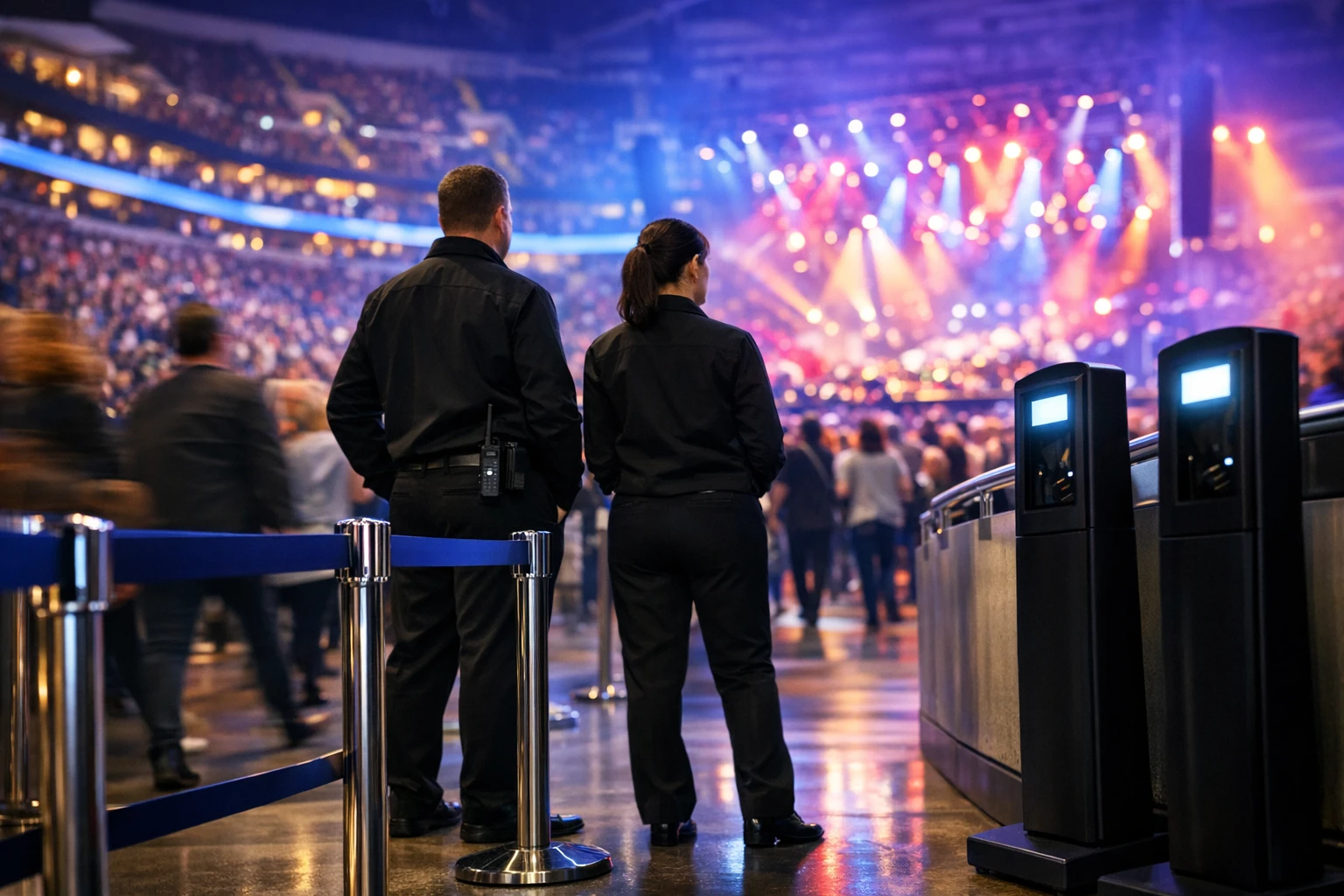
Work as Part-time concert event helper
Concert nights may look effortless from the crowd, yet behind every smooth entry line and well-guided seating section stands a team of part-time helpers keeping the evening on track. For students, freelancers, and anyone seeking flexible extra income, this role offers a close view of the live music industry while building customer service, teamwork, and event operations skills that transfer well beyond the venue doors.
Outline
This article follows five practical parts. First, it explains what a part-time concert event helper actually does and how the role changes by venue size. Second, it looks at the core skills employers value, from communication to stamina. Third, it compares pay patterns, scheduling realities, and common employment models. Fourth, it covers how to get hired and how beginners can build useful experience quickly. Fifth, it examines the challenges, safety expectations, and longer-term opportunities that can grow from this kind of work.
1. What a Part-Time Concert Event Helper Actually Does
A part-time concert event helper is one of those jobs that sounds simple until you see how many moving parts it touches. In practice, this role sits at the crossroads of customer service, crowd flow, venue operations, and timing. The title can vary by employer. One venue may call the role an usher, another may say event staff member, guest services assistant, floor helper, runner, or front-of-house support. Despite the different labels, the core purpose is similar: help the event run safely, smoothly, and on schedule.
The work usually begins before the music does. Helpers may arrive hours before doors open to set up queue barriers, place signs, check seating maps, test scanners, organize wristbands, or receive a briefing on crowd expectations and emergency procedures. Once attendees start arriving, the pace changes quickly. Entry points become busy, questions come from every direction, and small delays can ripple through the entire venue. A calm helper makes a real difference here, not through grand gestures, but through dozens of small decisions handled well.
Common duties can include: • checking or scanning tickets • directing guests to entrances, restrooms, or seating sections • assisting with accessibility access and special seating • handing out passes, programs, or venue information • monitoring lines and reporting congestion • helping with post-show crowd exit and basic cleanup coordination
The exact shape of the job depends heavily on the venue. In a 500-person club, one helper may wear several hats in a single shift, moving from the front door to the merch area and then to crowd guidance. In a theater, roles are often more polished and segmented, with clearer seating and guest-service procedures. In an arena, the work can feel almost military in its structure: zones, supervisors, check-in points, and highly specific assignments. At outdoor festivals, conditions add another variable entirely. Weather, uneven ground, longer walking distances, and temporary infrastructure make flexibility far more important.
It is also useful to understand what the role is not. A concert event helper is not automatically a security guard, a sound technician, or a stagehand, though the job may overlap with those teams. Security staff typically handle enforcement, conflict intervention, and restricted access areas. Technical crews manage lighting, audio, and stage changes. Helpers are often the connective tissue between departments. They spot issues early, communicate them clearly, and keep guests moving without unnecessary friction. On a good night, most of their work is nearly invisible. That invisibility is a sign of competence, not a lack of importance.
2. Skills, Personal Qualities, and Everyday Expectations
If this job had a hidden job description, it might read like this: be friendly, be observant, keep moving, and do not lose your cool when the line doubles in size in ten minutes. Part-time concert event helper work rewards practical strengths more than polished theory. Employers often care less about whether someone has memorized industry jargon and more about whether that person can show up on time, listen carefully, and deal with the public without making problems bigger.
Communication is the most visible skill. Guests want quick, clear answers, especially when they are excited, late, confused, or carrying too many drinks to unfold a seating map. A good helper gives directions in a way people can actually use. “Down the stairs, left at section B, then ask the usher at the aisle” works better than vague pointing. This matters more than it might seem, because concert environments are loud, crowded, and time-sensitive. When a few thousand people arrive within a short window, clarity becomes an operational tool, not just a courtesy.
Other important qualities include: • punctuality, because late arrivals affect the whole staffing plan • physical stamina, since many shifts involve standing or walking for hours • situational awareness, especially near busy doors and bottlenecks • patience, because the same question may be asked fifty times • emotional control, particularly when dealing with irritated or intoxicated guests • teamwork, because event work is rarely a solo performance
There is also a difference between being social and being service-minded. Someone may love music and still struggle in this role if they become distracted, avoid instructions, or focus too much on the show itself. The job is closer to live operations than casual attendance. In fact, one of the first surprises for new hires is that they often hear more of the crowd than the concert. If you are working a doorway, a seating aisle, or a corridor, your attention belongs to the task first.
Dress and presentation matter too. Many venues require neutral clothing, black shoes, name badges, radios, or venue-issued shirts. This is not only about appearance. It helps guests identify staff quickly and supports a sense of order. Employers also tend to value workers who can follow a chain of command without drama. A reliable helper knows when to solve a problem personally and when to escalate it to a supervisor, medic, or security team.
The best way to picture the ideal worker is not as a star, but as a stabilizer. They are the person who notices the wrong queue forming, redirects it before frustration grows, and keeps the mood steady. In a live event setting, that quiet competence is gold.
3. Pay, Scheduling, and the Different Ways People Get These Jobs
One of the main reasons people consider concert event helper work is flexibility, but that flexibility comes with trade-offs. Pay, scheduling, and employment terms can vary widely depending on who hires you and where the event takes place. Some people work directly for a venue. Others are hired by staffing agencies that supply event workers to multiple locations. A growing number also find shifts through temporary job apps or local event labor networks. Each route has advantages and limitations.
Direct venue employment often offers the most consistency. If you are on a regular roster for a theater, arena, or civic venue, you may receive recurring shift offers, clearer training, and a better sense of how the operation works. The trade-off is that competition may be higher, and the employer may expect long-term reliability. Staffing agencies can be easier to enter because they hire for volume, especially during busy seasons. However, the experience may feel less personal, and assignments can vary sharply from one event to the next. Gig-style platforms offer speed and convenience, but schedules may be more fragmented and training less detailed.
Pay usually reflects local labor markets, venue type, and shift difficulty. Entry-level helpers are commonly paid hourly, often around local minimum wage to somewhat above it, with occasional premiums for late-night work, high-demand events, or specialized responsibilities. Some venues offer practical extras such as meal vouchers, staff parking, transport support, or repeat-booking priority. It is wise not to assume free concert access is part of the deal. In many cases, you are working during the performance rather than watching it.
Scheduling can be both a benefit and a challenge. Concerts cluster around evenings, weekends, holidays, and tour seasons. That makes the role attractive for people with daytime commitments, but harder for anyone who needs predictable weekly income. A shift might last four hours for a smaller show, or stretch much longer for a stadium event with early setup and late crowd release. Call times can shift with little notice if doors change, support acts are added, or weather affects outdoor events.
A useful comparison looks like this: • Small local venue: shorter shifts, broader duties, more informal atmosphere • Major arena: larger teams, stricter protocols, clearer division of tasks • Festival work: longer days, weather exposure, heavier walking, faster changes • Agency assignments: more variety, less predictability • Direct hire roles: more structure, better continuity, slower hiring process
For anyone considering the role as a side job, the key question is not simply “How much does it pay?” but “How does the schedule fit my life, and how stable is the opportunity across a season?” That answer matters just as much as the hourly rate.
4. How to Get Hired and Build Experience Without Overcomplicating It
Breaking into part-time concert event work is usually less about having a glamorous background and more about presenting yourself as dependable, practical, and easy to train. Many employers know they can teach venue-specific procedures. What they cannot easily teach is maturity under pressure. If you want to get hired, your first task is to show that you understand the nature of event work: variable hours, public-facing duties, and the need to follow instructions consistently.
Good places to look include venue websites, arena career pages, local theater companies, university event departments, convention centers, sports facilities that also host concerts, hospitality staffing agencies, and reputable temporary-work platforms. Community event calendars can also help identify the organizations actually producing shows in your area. Once you know who runs events locally, you can monitor hiring cycles more intelligently instead of searching blindly.
Your application does not need to read like a production manual. It should highlight directly relevant strengths. Useful experience includes retail, hospitality, ticketed attractions, customer service desks, campus events, volunteer festivals, food service, reception work, and any role that required dealing with lines, timing, or large groups. Even if your past work was not in entertainment, the transferable skills are often obvious if framed well.
Strong resume points might include: • handled high volumes of customer questions in fast-paced settings • managed queues, entry points, or seating assistance • followed cash handling, safety, or identification procedures • worked evenings, weekends, and event-based schedules • collaborated with supervisors and cross-functional teams • maintained professionalism during busy peak periods
Interviews for these roles are often straightforward, but they reveal a lot. Employers may ask how you would handle an upset guest, what you would do if you did not know an answer, or whether you are comfortable standing for long periods. They are testing judgment as much as enthusiasm. A calm answer like “I would assist within my role, avoid guessing, and involve a supervisor when needed” is more impressive than overconfidence.
Training can range from a short orientation to more detailed onboarding with venue maps, radio etiquette, emergency procedures, and accessibility guidance. Some workers also strengthen their profile with optional certifications such as basic first aid, alcohol service awareness where relevant, or crowd management training. These are not always required, but they can help, especially at larger venues.
There is also a quiet strategy that works well in this field: become memorable for the right reasons. If supervisors know you arrive early, follow directions, and do not vanish when the crowd gets heavy, you are far more likely to be invited back. In event work, repeat trust often opens the next door faster than a polished cover letter.
5. The Real Challenges, Safety Factors, and Long-Term Value of the Role
It is easy to romanticize concert work. There are flashing lights, famous names on posters, and the buzz that gathers outside a venue before doors open. But the practical reality is more grounded. This job can be rewarding, yet it also asks for resilience. Long periods of standing, late finishes, loud environments, changing instructions, weather exposure at outdoor events, and occasional difficult guest interactions are all part of the landscape. Anyone considering the role should understand both the energy and the effort.
Safety is one of the most serious aspects. Even entry-level helpers are part of a wider risk-management system. They need to know evacuation routes, restricted areas, reporting procedures, and the difference between a routine inconvenience and a matter that must be escalated immediately. A spilled drink is housekeeping. A blocked exit, medical incident, or aggressive crowd behavior is something else entirely. Good venues train staff to report quickly rather than improvise dangerously. In that sense, the role is not only about service; it is also about awareness.
Common challenges include: • dealing politely with frustrated guests who arrive late or sit in the wrong section • staying professional around intoxicated attendees • handling repetitive questions without sounding impatient • adjusting to last-minute schedule or access changes • maintaining focus when the venue becomes noisy and chaotic • working through the less glamorous end of the night, when cleanup and exit control matter most
There is also the issue of expectations. Some people take their first shift imagining a semi-paid concert experience and leave surprised by how operational it feels. That does not make the job less valuable; it makes it more honest. You are part of the machinery that turns a ticketed event into a coherent experience for thousands of people. When seen in that light, even modest tasks gain meaning.
Long-term value is where the role often becomes more interesting. For students, it can be a flexible income source with real-world responsibility. For career changers, it offers a low-barrier entry into events, hospitality, or entertainment operations. For music fans, it provides a realistic view of how venues function beyond the stage. Over time, reliable helpers may move into team lead roles, venue operations, box office support, artist hospitality, production running, stage crew pathways, or broader event coordination work.
Think of the job like working in the wings of a live performance. You may not hold the microphone, but you learn how timing, planning, and people management make the whole night possible. For many workers, that insight becomes the real reward. It builds habits and credibility that travel well, whether the next step is a larger venue, a different branch of events, or a completely separate career that still values composure under pressure.
Conclusion for Students, Side-Hustlers, and Music-Industry Newcomers
Work as a part-time concert event helper is a practical role for people who want flexible hours, hands-on responsibility, and a direct look at live entertainment from the inside. It is best suited to those who can stay organized in noisy settings, communicate clearly, and treat every shift as real operational work rather than background access to a show. If you are exploring a side income, testing the waters of event work, or building experience that can support future opportunities, this role offers a solid starting point. The biggest advantage is not glamour but momentum: each successful shift teaches timing, service, teamwork, and professionalism in a setting where those qualities matter immediately.